There is a pattern we keep seeing in the studio inbox since the start of the year. A reader finds one of our restored plates — chamomile, cornflower, ivy, fennel — and writes to ask whether we have a "rose coloring print out" version. Not a print of the plate. A line-only, color-it-yourself version. The request has multiplied enough in 2026 that we need to say, in public, what we have been saying privately: a 19th-century botanical plate is not a coloring page, and treating it as one quietly erases the thing that made it worth restoring. This piece is about why.
The Pattern We Keep Seeing in the Print Queue
The request arrives in a predictable shape. A reader lands on a species page — the chamomile from Thomé, say, or the cornflower — spends a few minutes scrolling, and then writes back asking for the same image stripped of its tone. "Could you send the line version?" "Do you have a coloring sheet?" The subject line is almost always some permutation of flower plus the word "printout". Rose comes up more than any other species, which is interesting on its own, because rose is not even on the plate they were looking at. The reader has arrived with the search already formed.
What changed in 2026 is not the existence of this request. People have been printing illustrations to color in for a very long time, and children have been handed botanical pictures with a box of pencils for longer than any of us. What changed is the volume, the age of the senders, and the referrer path. Through the first ten months of this year the share of inbound mail that mentions "coloring", "print out", "printable", or "line version" has roughly tripled against the same window in 2024. The traffic now arrives in waves that line up with Pinterest surges and school-term boundaries, not with botanical seasons. And the senders are no longer parents with children in the room — they are adults, often retirees, often teachers, writing on their own behalf.
The second shift is more technical. Until recently, if someone wanted a line-only version of a botanical scan, they used a plug-in or an online tool that produced something visibly crude: harsh edges, lost petals, a lot of digital artifact where tonal passages used to be. In 2026 the generative-image tools have become good enough that a reader can feed a plate into a model and receive back something that looks, on first glance, like a legitimate coloring-book page. The output is not legitimate — we will get to why — but it is convincing enough that the reader often does not notice the plate they loved has been quietly dismantled on the way through. That is the specific thing we are writing about. The request used to be naïve; now it comes with an invisible transformation attached, and the person on the other end does not always know a transformation happened.
The Scan-As-Line-Art Fallacy
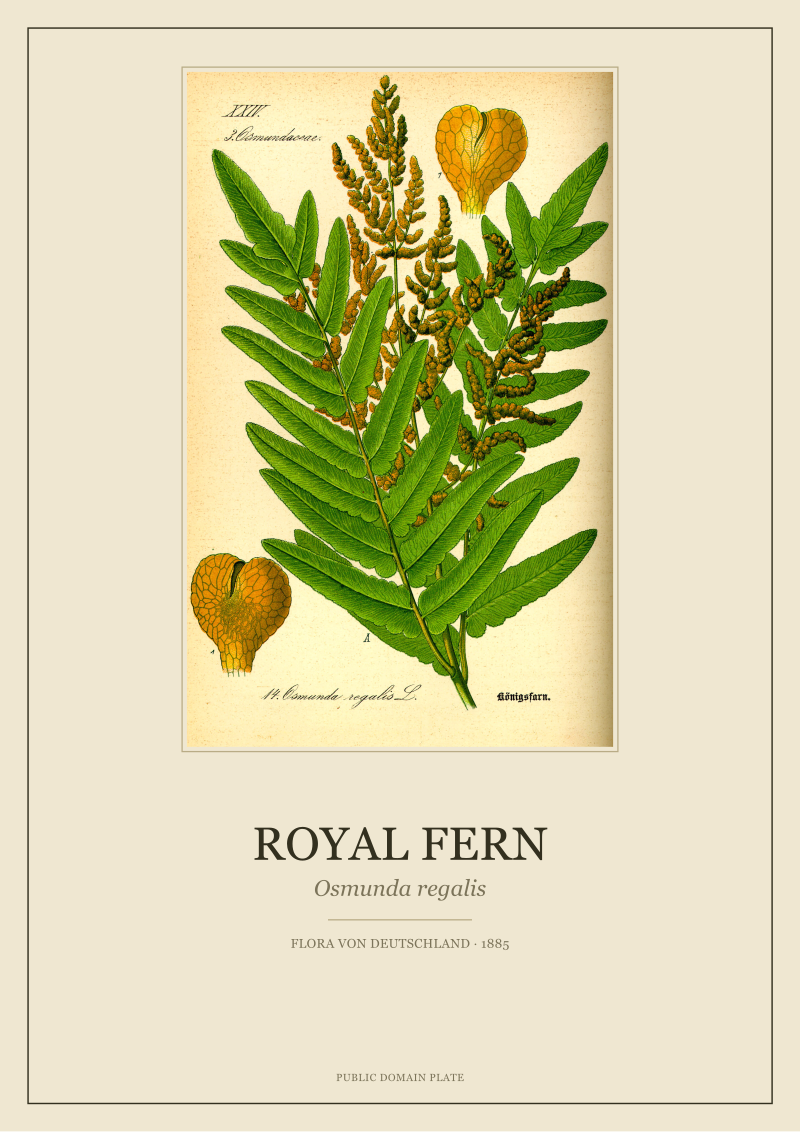
The fallacy at the center of all this is the belief that a scan of a 19th-century botanical plate is already, or almost already, a line drawing. It is not. A plate from Thomé's *Flora von Deutschland, Österreich und der Schweiz* (1885) was never made of outlines. It was made of ink laid down in parallel strokes, cross-hatched, broken, feathered — a lithograph in which the appearance of a leaf's volume comes from density of mark, not from a boundary drawn around it. When you strip color from such an image, you are not revealing a hidden coloring page underneath. You are deleting the artist's actual draftsmanship and keeping only the places where his hand was busiest.
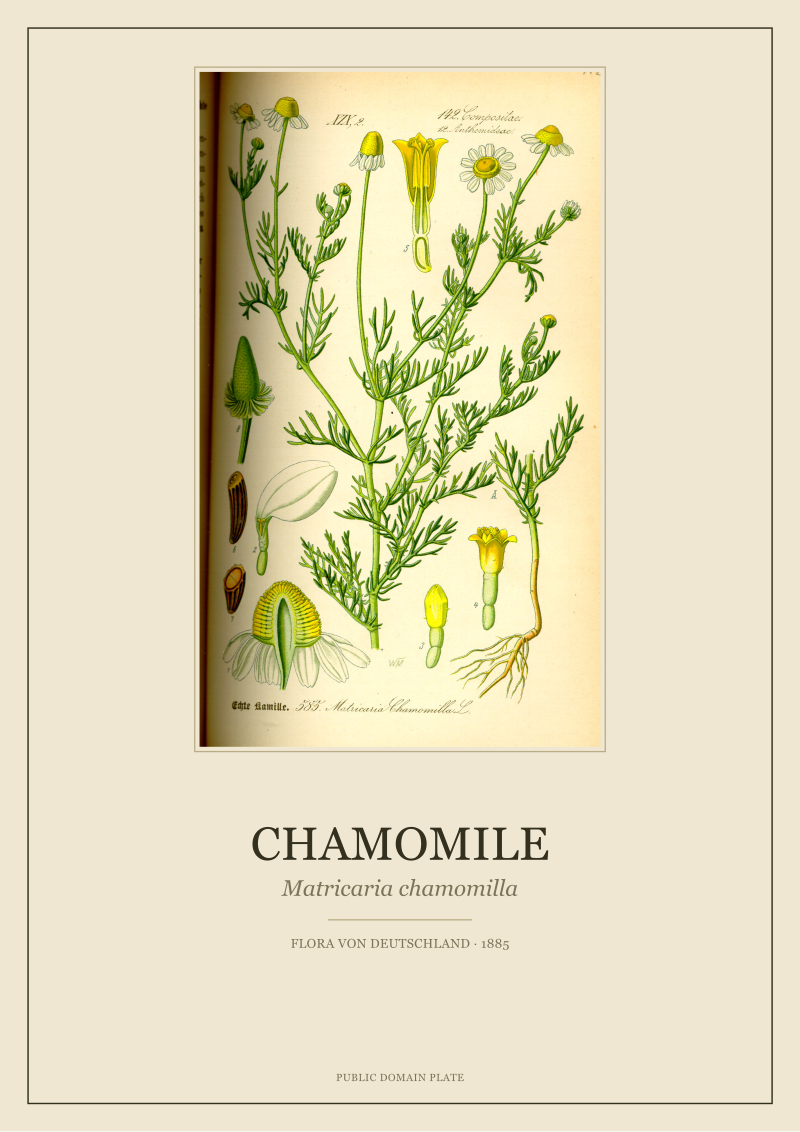
Spend an afternoon with the chamomile — *Matricaria chamomilla*, in the Thomé — and you will see what we mean. The ray florets are not outlined. Their whiteness is implied by the deliberate restraint of mark-making around them, by a cluster of fine shadow lines where the petal meets the receptacle, by the way the stroke tapers at the tip. Reduce the plate to "lines" with any current tool and the florets collapse into something approximating a daisy pictogram. The specificity — the thing that lets a botanist read the plate as *this* species and not another — is in the tonal passages the tool just threw away.
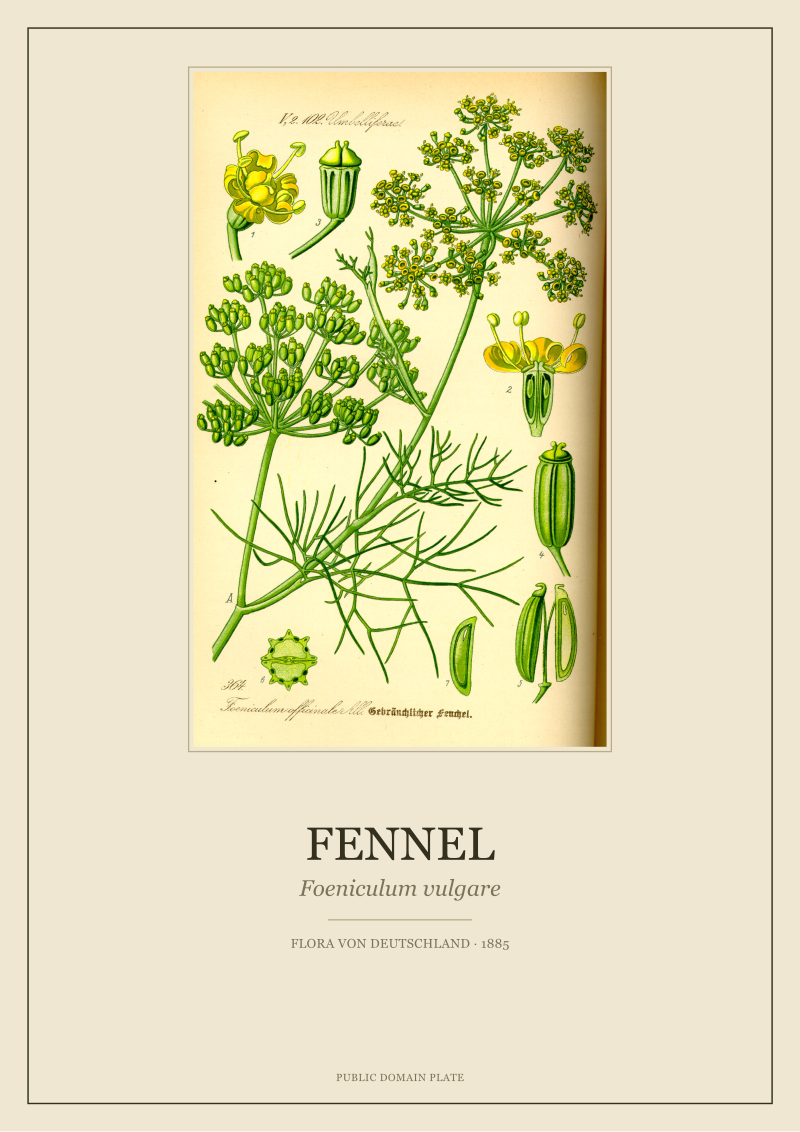
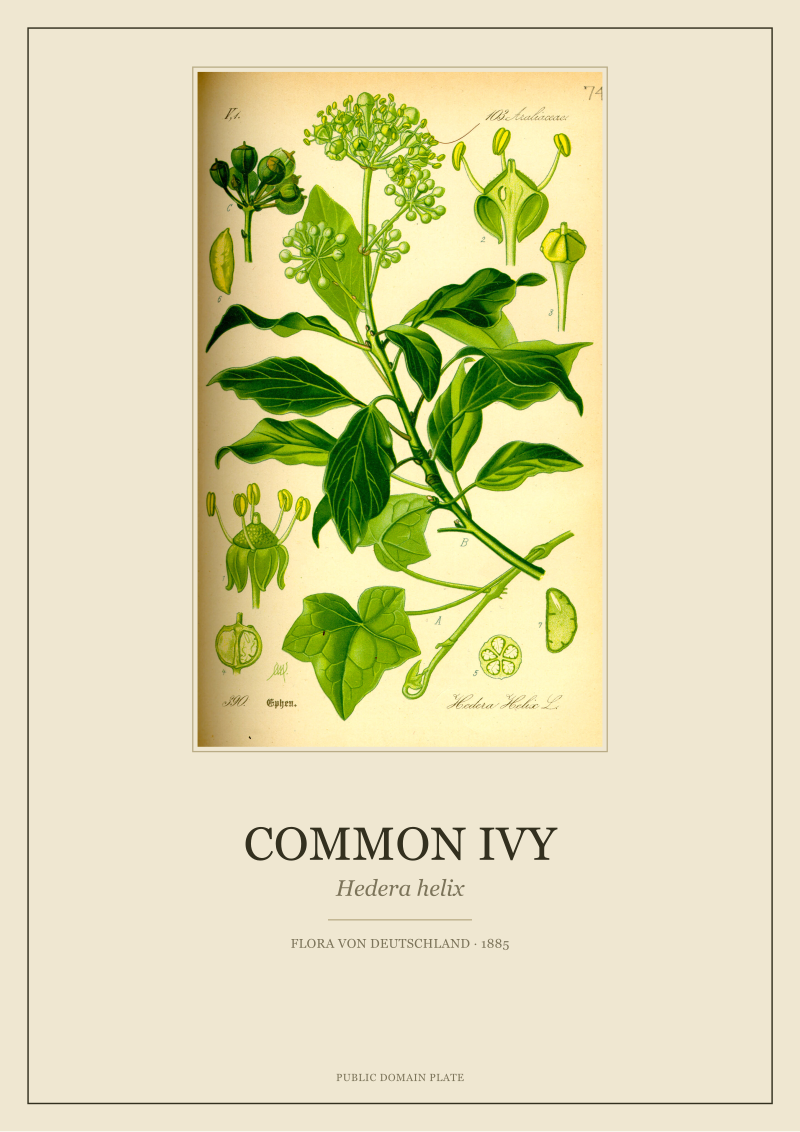
The same is true of the common ivy, *Hedera helix*. The characteristic palmate lobing of the juvenile leaf reads the way it does because Thomé's engraver understood where the vein shadow had to sit, and how deep. Ivy leaves without those shadows become generic foliage. In fennel — *Foeniculum vulgare* — the problem is more acute still. The entire charm of the plate is the feathery dissection of the leaf, drawn as hundreds of fine, parallel marks suggesting air moving through the plant. Convert that to line art and you get a cartoon of a herb. We have tested this with every tool we could find in 2026. None of them preserve what a botanical draftsman would consider the species identity of the image. All of them produce a flatter, less-informative object dressed up as a coloring sheet.
The irony is that the reader who writes to ask for the line version almost always loves the original *because* of the shading. They have printed it for the wall. They mention the depth of the leaves. Then they ask us to remove the thing they are describing.
A botanical plate is not a coloring page waiting to be colored; it is a drawing already finished, by someone who thought the color was part of the argument.
 Chamomile
The print from this article · from €29.95
View the print →
The Public Domain Confusion
The second thing that changed in 2026 is a legal misunderstanding that has become almost universal. We spent some weeks tracing where it comes from — a mix of Pinterest captions, a few popular YouTube videos about free printables, and a wave of generative tools whose marketing copy specifically invokes "public domain botanical art" as a feedstock. The misunderstanding goes like this: Thomé's 1885 plates are in the public domain, therefore any scan, any restoration, and any derivative is also in the public domain, therefore you can do anything to them, and that includes turning them into a rose coloring print out.
The first part is true. The 1885 edition of *Flora von Deutschland* is unambiguously public domain. The plates reproduce freely. We say so on every species page in our catalog, and we would say so even if we were not legally required to. The last part is where things get muddled. Public domain is not an argument about what *should* be done with a work; it is an argument about who is allowed to decide. The scan a user downloads from an archive is public domain. The hundreds of hours of restoration labor someone has put into clearing foxing from the paper, re-aligning the plate from a buckled page, rebuilding fibre-torn edges, re-balancing the ink densities so the image reads on a modern screen without crushing the shadow detail — that labor does not create a new copyright over the plate itself, but it does create a legitimate editorial object with intent behind it.
Converting that restored object into line art for coloring is legal. We are not making a legal argument against it. We are making an editorial argument that the people doing it have mistaken "I may" for "this is what the plate is for". The two sentences are not the same. The 1885 lithograph was made so that a reader of a flora could identify a plant. The 2026 restoration was made so that a modern reader could see what the 1885 lithograph looked like before the paper went brown. Neither of those intents was ever "fill the florets in with a pink pencil".
The confusion matters because it has been exported into the inboxes of botanical publishers, museum shops, and small studios like ours, and the senders now expect that any reluctance to produce the coloring version must be a copyright hoarding of some kind. It is not. It is a refusal to pretend the plate was something it was not.
The Coloring Book Substitute for a Botanical Education
The deepest version of the pattern is the one we have been slowest to say out loud. When a reader asks for a "rose coloring print out" after spending twenty minutes on the chamomile page, the request is not really about rose, and it is not really about coloring. It is about wanting to spend more time with the plant, and reaching for the only hand-shaped thing most of us were taught for doing that: color it in.
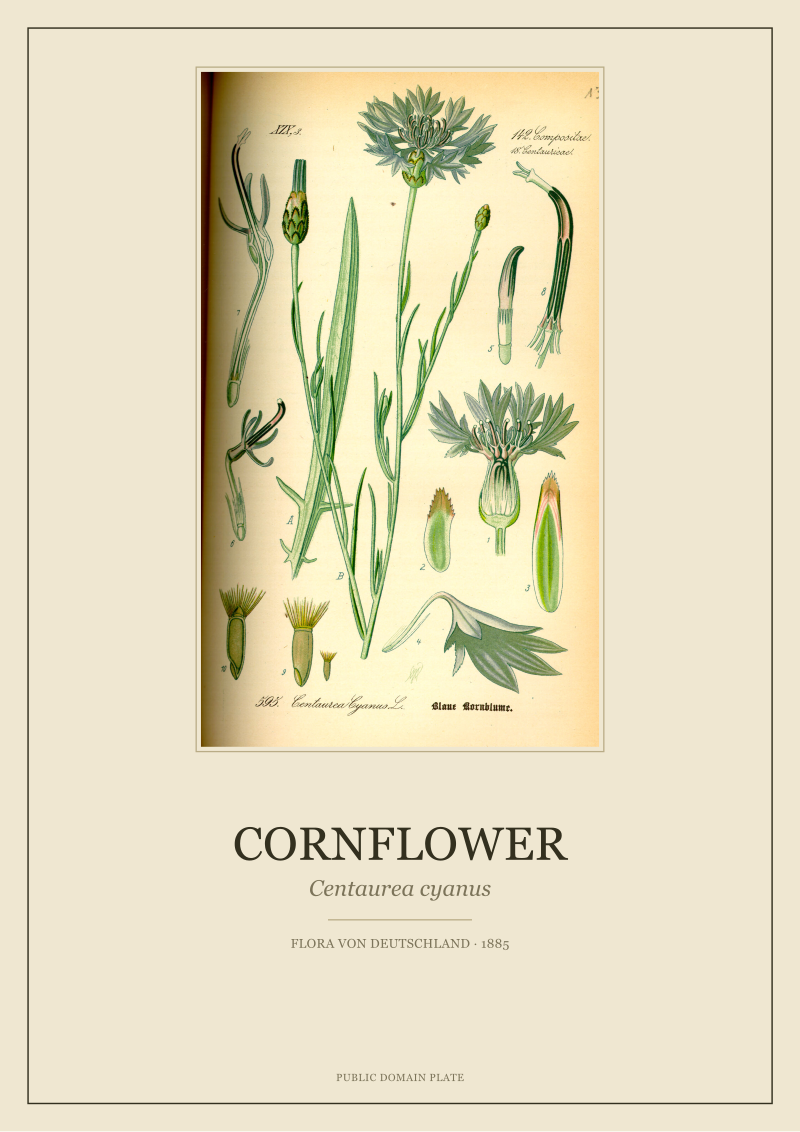
A Thomé plate was built for a different kind of attention. It gives you more than a silhouette. It gives you the whole plant on one sheet — the habit of the stem, the leaf arrangement, the inflorescence, and a dissected view of the parts of the flower drawn separately in a corner of the page, often at a different magnification and labeled. The cornflower plate — *Centaurea cyanus* — shows the composite head whole and then opens one up, so the reader can see that what looks like a single blue flower is in fact a crowd of them. The chamomile is shown the same way, with the little tubular disc florets drawn as individuals. The ivy is shown both as juvenile climbing leaves and as the different-shaped adult foliage of the fertile shoot; a reader who had only ever seen one form could use the plate to understand there were two. The fennel is shown with the compound umbel broken out into its elements. These are not decorative choices. They are a teaching apparatus, and the apparatus is the entire reason the plate exists.
A coloring page cannot do that work, because the apparatus is the first thing a line-conversion tool deletes. Dissection panels do not survive the process; they get flattened into unlabeled little picture-fragments at the edge of the sheet. Latin labels get read as noise and dropped. The scale indication, which is small and faint on most plates, is lost in the first pass. What the reader ends up with is a petal-and-leaf outline with none of the information that would have let them learn the plant. If the goal is to spend more time with the species, that is a bad trade. The plate itself, printed on decent paper, framed on a wall, and glanced at every day for a year, teaches more than a weekend of coloring in a stripped-down version of it ever would.
 Cornflower
The print from this article · from €29.95
View the print →
So What Do You Actually Do
If you want to color roses, do so with full editorial blessing — just use a coloring book that was designed as a coloring book, by an illustrator who made line art on purpose. There are many of them. They are not expensive. They give you the thing your afternoon needs. Nothing we are saying here is against the activity of coloring. We are only against pretending a 140-year-old lithograph is a coloring sheet when it is not.
If you came looking for a botanical print to live with — chamomile, cornflower, ivy, fennel from Thomé's *Flora von Deutschland* and the other plates we work with — print it as a print. Our restored files are built to be printed at full size, with the tonal detail intact, on paper heavier than a copy sheet. The plates we have cleaned and rebalanced live in our shop. Hang one above a desk and you will find yourself looking at it for longer than any coloring activity would have held you, because the drawing is still doing work. If you want to go further, read the plate the way it was meant to be read: start with the Latin, read down to the inset panels, and spend a minute figuring out what the engraver chose to magnify and why. That is the thing the request for a coloring version was really reaching for.
This piece did not address rose plates specifically, because we do not restore from a rose edition of Thomé and we would not be qualified to speak about the botanical draftsmanship of works we have not handled. It did not address the use of botanical imagery in schools, which is its own argument with its own evidence. And it did not address the ethics of generative-image models that are trained on public-domain botanical scans without acknowledging the restoration layer, which is a much larger conversation we expect to come back to.
FAQ
Why don't you offer line-only coloring versions of your restored plates?
Because a plate from Thomé's 1885 *Flora von Deutschland* was never drawn in lines. It was drawn in tonal lithographic marks that convey the species' identity through shading density, not outline. Removing the tone to make a coloring sheet deletes the draftsmanship we spent the restoration preserving, and the finished object no longer teaches the plant. We would rather point readers to proper coloring books than produce a stripped version of a plate pretending to be one.
Is a 19th-century botanical plate in the public domain?
Thomé's 1885 edition is unambiguously public domain, and our catalogue says so on every species page. That means the original lithograph can be freely reproduced. It does not automatically mean every derivative use is a good editorial fit for the work. Legality and intent are different arguments. We make the restoration freely visible; we also take editorial positions on what the plate is for, and a coloring sheet is not one of those uses.
Can I print a chamomile or cornflower plate at home for personal use?
Yes. The restored files on our species pages are built to print well at full page size on uncoated paper heavier than ordinary copy stock. The tonal passages carry best when the printer is set to its photo or best-quality mode rather than its draft mode, and the frame should let the paper breathe at the edges. We prefer this use of the plates by a wide margin over any attempt to convert them into something else first.
What is the technical difference between a lithograph and a line drawing?
A line drawing describes shapes with outlines; the inside of a shape is a bounded, empty area. A lithograph of the 1885 kind describes form with directional, closely-spaced marks that build up tonal volume, and the "shapes" are implied by variations in mark density. When you reduce a lithograph to lines by filtering, you throw away the mark density and keep only the places where it was heaviest, which is why the resulting image reads as a crude silhouette of the plant rather than a drawing of it.
Why do rose coloring print-out searches land on sites about botanical plates?
Because the search engines, and particularly image search, have conflated "botanical illustration" with "nice drawing of a flower you can color in". The 2026 generation of generative-image tools reinforced the conflation by scraping public-domain botanical scans into training data labelled as "line art reference". Readers arrive on our chamomile or ivy page thinking they are one click from a rose coloring page, and part of our editorial job this year has been to explain why that click does not exist on the sites that take the plates seriously.
If I want to teach a child about plants with coloring, what should I use instead?
Use a coloring book made by an illustrator who drew the plant as line art on purpose, with the activity in mind. Those books exist in large numbers and often come with simple species notes. If the goal is for the child to recognise, say, a cornflower in the field, a well-drawn, deliberate coloring page will do more useful work than a filtered version of a Thomé lithograph, because it was designed to teach shape by filling it in. The Thomé plates can then come later, as the next thing — hung on a wall, consulted when a plant is picked up on a walk.
Do the little figures in the corner of a botanical plate have a name?
They are usually called dissection panels or analytical figures. They show the parts of the flower, fruit, or seed drawn separately, often at a higher magnification than the main habit figure, and sometimes with a letter or number key relating them to the species description in the text. On the chamomile plate they let you see the individual disc florets; on the cornflower, the structure of the composite head; on the fennel, the elements of the compound umbel. They are the first thing a coloring-conversion deletes, and the single most important teaching device the plate contains.
New plates from the archive and 10% off your first print.
One email now with your code. No noise after.