The rose is where you find out whether a 19th-century flora was serious. That is the pattern we keep seeing across the plates that come through the studio for restoration — the wall-lithograph editions, the school primers, the great state-funded volumes like O.W. Thomé's Flora von Deutschland, Österreich und der Schweiz of 1885. Chamomile, cornflower, ivy, fennel: those pages tend to hold. The rose plate is where the printer's hand shakes. It is where colour separation breaks, where anatomy blurs into decoration, and where the volume either earns its reputation or quietly gives itself away.
The Pattern of Overreach: Why the Rose Broke Small Floras
The pattern is almost mechanical: the smaller and cheaper the flora, the worse the rose plate.
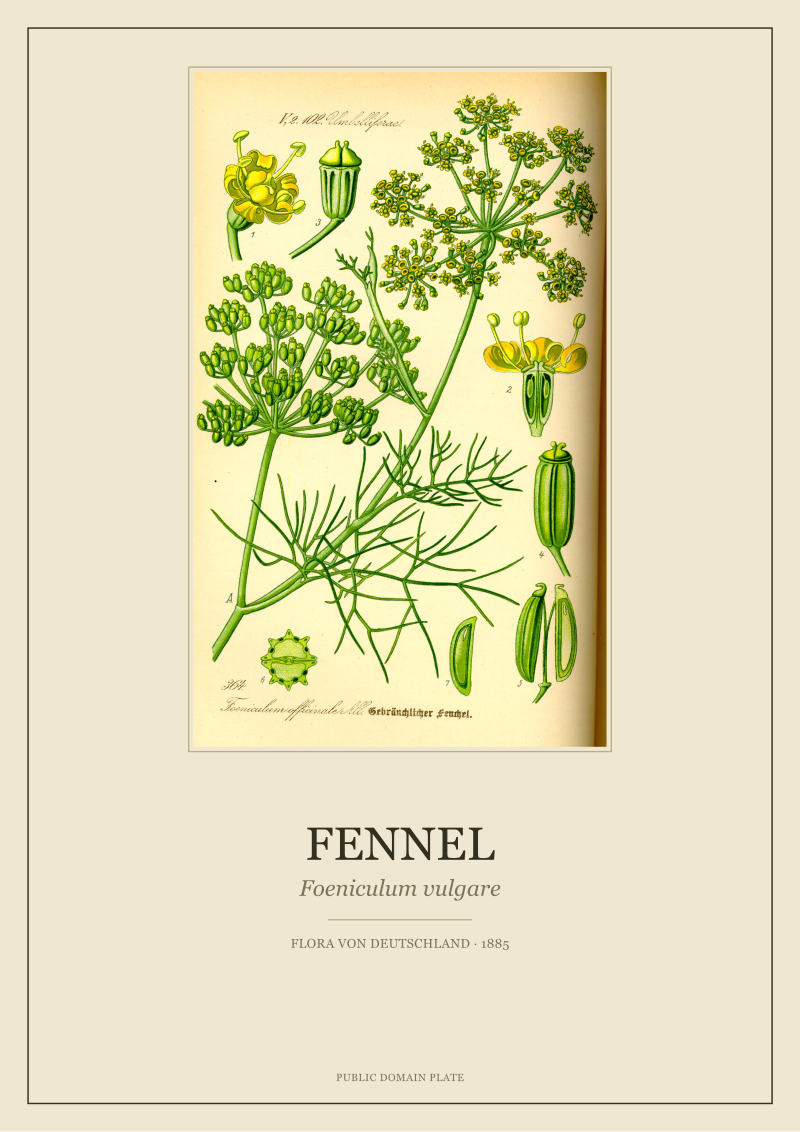
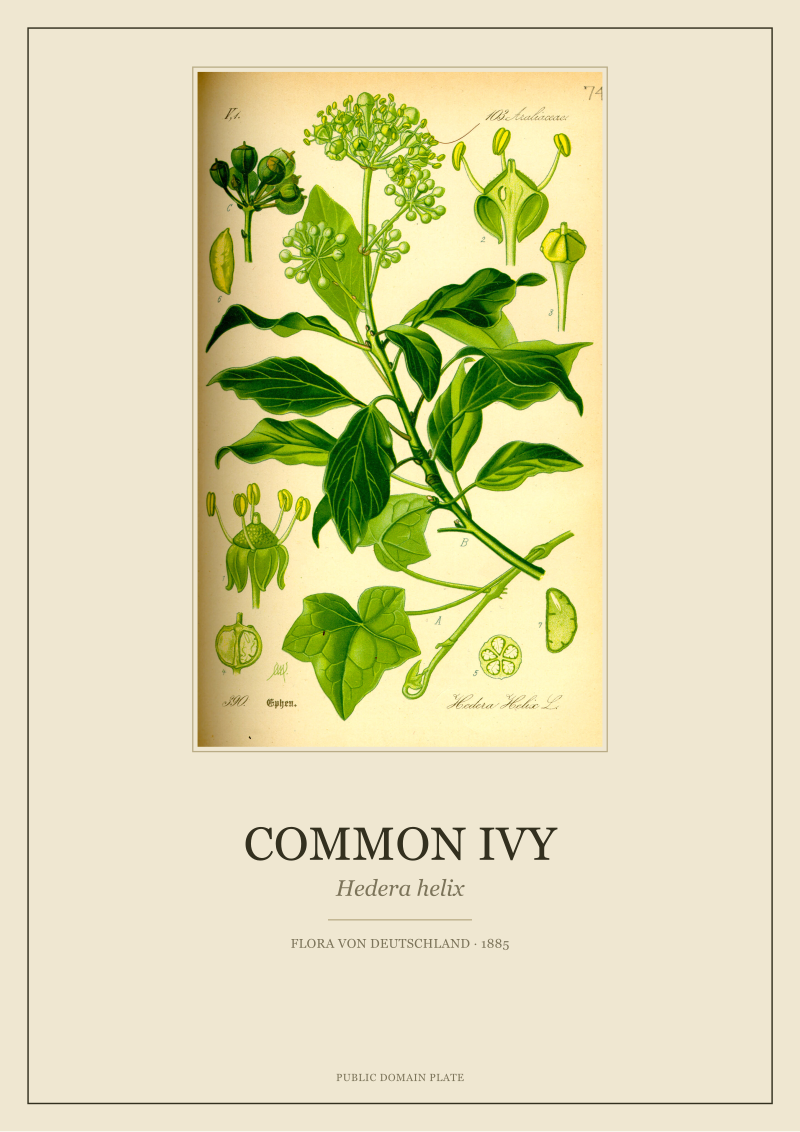
We see it because we handle a lot of these volumes in sequence. A studio like ours does not have the luxury of falling in love with one plate at a time. Scans arrive in bundles — a dozen from one edition, twenty from another — and the eye starts to compare instinctively. Chamomile (Matricaria chamomilla) in Thomé's 1885 volume is rendered with the small ray florets holding a legible separation, the yellow disc reading as a single shape rather than a smudge. The cornflower (Centaurea cyanus) shows the star-radiating anatomy of the involucral bracts even in modestly-priced reprints of the same plate. Common ivy (Hedera helix) survives even the roughest print runs because its lobes are simple and its palette forgiving. Fennel (Foeniculum vulgare) is a printer's friend: the umbel is a geometric problem, not a colour problem, and colour was where floras broke.
The rose is where all four kinds of difficulty arrive at once. It demands three or four registered colour stones instead of two. It requires the illustrator to resolve a form that is neither radially symmetric like the daisy family nor structurally simple like the ivy leaf. It asks the botanist to commit to a taxonomy that was, and remains, a scholarly minefield. And it does all of this on a plant that the reader already thinks they know — which means every error is immediately visible to the audience the volume most needed to impress.
The overreach was not vanity. Publishers understood that a subscriber leafing through a prospectus in 1878 or 1885 or 1901 would flip to the rose page first. If it was thin, if the pink had turned magenta in registration, if the leaf serrations looked like a woodcut from thirty years earlier, the sale was lost before Ranunculus. Every serious flora attempted a rose plate for the same reason every serious restaurant used to keep a soufflé on the menu. The failure rate was the point.
The Chromolithography Ceiling: Where Ink Stopped Meeting Petal
Chromolithography could reproduce almost anything in the German plant kingdom of the 1880s — except a rose.
The process, briefly, is this: an artist draws the image once, then a lithographer separates it by hand onto multiple limestone slabs, one per colour. The stones are inked, and the paper passes through the press once per stone, each pass laying its colour into the exact register of the last. A blue plate for cornflower petals; a yellow plate for chamomile discs; a green plate for ivy foliage. Simple flowers with saturated, near-monochromatic colour zones survive this process even when the register drifts a hair. The eye reads the intent.
The rose refuses to be a zone. A pink rose petal is not one pink; it is a graded field from near-white at the inner curl to a saturated carmine at the outer edge, with cooler shadow reads underneath and a warm reflected light on the reverse. Chromolithographers responded with more stones — five, six, sometimes seven — and with stippled overlays to fake gradation. But every additional stone was another registration risk, another cost, another opportunity for the wet ink of pass three to smear the drying ink of pass two. Cheaper floras cut stones out and let the rose flatten into a strawberry-ice colour that any reader could see was wrong. Better floras kept the stones and lost money on the plate. That is not a metaphor. That is a line-item.
The workshops that survived did so by choosing their difficulties. Thomé's team chose comprehensiveness of the German flora over showpiece plates — which is why a chamomile from 1885 still looks like chamomile, and why the volume's reputation rests on its coverage rather than on any single virtuoso page. Other publishers chose the opposite bet, and the survivors of that bet are the plates that hang in museum-restoration catalogues today. Most did not survive it.
Every 19th-century flora eventually made a choice: it could be honest about the rose, or it could pretend the rose had been solved — and the plates tell you which choice was made the moment you turn to that page.
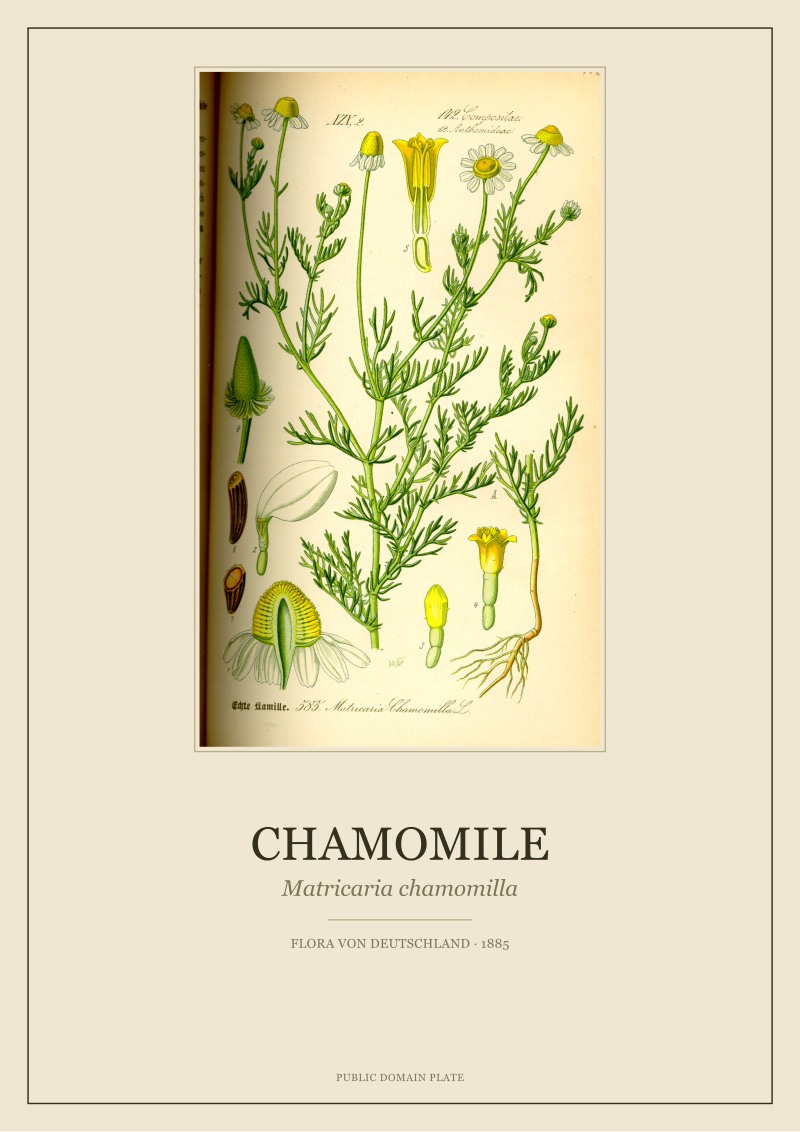 Chamomile
The print from this article · from €29.95
View the print →
Chamomile
The print from this article · from €29.95
View the print →
The Ownership Question: No Single Flora Ever Owned the Rose
There is a second reason no one talks about, and it is taxonomic rather than technical: the rose was, in 1885, a moving target that no flora could reasonably claim to have caught.
The genus Rosa was already in a state of scholarly disarray by the mid-nineteenth century. Botanists could not agree on how many species existed within Central Europe alone, let alone across the ranges the great floras covered. Estimates swung wildly depending on which authority you consulted, because the wild roses of the region hybridise readily and produce intermediate forms that some botanists split into new species and others lumped back into old ones. On top of the wild populations sat the cultivated roses — hundreds of named varieties by the 1880s, with new ones released each season by nurseries in France, England and Saxony, most of them irrelevant to a serious flora but impossible to ignore in the popular imagination.
A flora is, at its core, a promise: this book contains the plants of this territory. The rose broke that promise structurally. A German flora that showed Rosa canina without addressing R. rubiginosa, R. tomentosa, R. dumalis and the dozens of contested microspecies looked incomplete. One that attempted all of them looked padded, inconsistent in illustration quality, and — most damagingly — like it was fudging boundaries the botanical community itself could not settle. Thomé's volume handled the problem by treating the genus with restraint appropriate to a general national flora rather than as a specialist monograph, which is honest editorial practice and also, incidentally, why his rose plates are not what his volume is remembered for.
The floras that tried to own the rose either padded their taxonomy with distinctions their own text could not defend, or restricted themselves to one or two representative species and let the reader assume the rest existed elsewhere. Both strategies produced a page that a modern restorer opens with slight dread, because both strategies produced plates where the editorial judgement is doing more work than the drawing.
What the Rose Reveals About the Rest of the Volume
By the time a plate reaches our scanner, the rose page has already told us most of what we need to know about the volume it came from.
The diagnostic is nearly infallible. A rose plate where the pink has been achieved through disciplined colour separation, where the leaf serrations are consistent between primary and secondary leaflets, and where the stamens read as individual filaments rather than a yellow blur, tells us the workshop invested in stones and time. When we turn to the volume's chamomile plate, we expect — and find — the same standard. The involucral bracts of the cornflower will be individually resolved. The umbel rays of the fennel will terminate cleanly. The venation of an ivy leaf will show the deep central rib and the pale lateral veins as separate line-work rather than a single embossed shape. Volumes that got the rose right got everything right, because the discipline required to attempt the rose is the same discipline the workshop then applied downstream.
The reverse is also true, and it is the more useful test. A rose plate where the pink has bled outside the petal edge, where a leaf shows serrations on one side and a smooth margin on the other, or where the flower's centre is a beige void where stamens should be, is a warning. We open the ivy page next, and we typically find lobes with the same registration drift. The cornflower will have a fuzzy involucre. The chamomile will show a printer's ghost — a faint colour halo suggesting the yellow stone was pulled slightly off register and never corrected. These are not random defects. They are the fingerprint of a workshop that cut costs across the whole print run, using the rose as the visible symptom of a systemic choice.
For a restoration studio, this changes what we do before we spend hours on a plate. A flora that fails the rose test is a flora where every subsequent plate needs more forensic work — deeper colour reconstruction, more decisions about which line is intent and which is bleed. A flora that passes it, like Thomé's, allows us to trust the source and concentrate on the honest damage of a hundred and forty years of paper aging rather than on second-guessing what the printer meant.
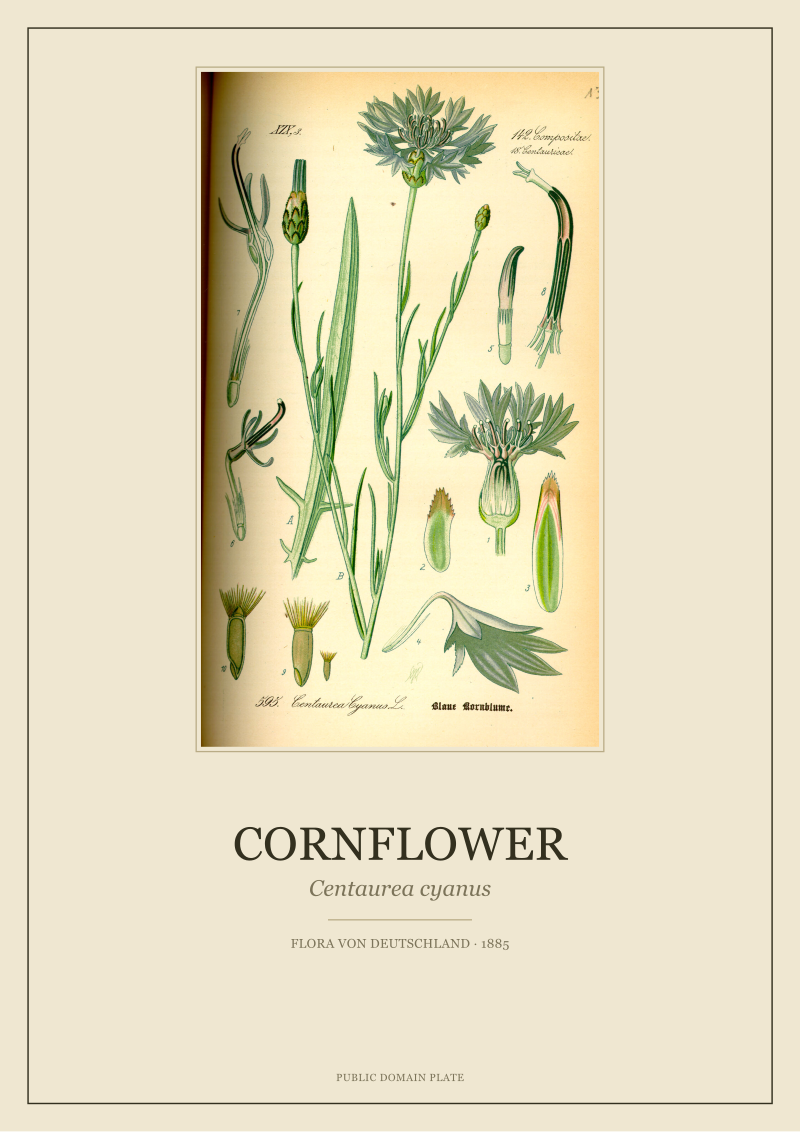 Cornflower
The print from this article · from €29.95
View the print →
Cornflower
The print from this article · from €29.95
View the print →
So What Do You Actually Do
If you are a collector or a reader deciding whether a 19th-century flora is worth the shelf space, open it to the rose page first — before the title, before the frontispiece, before the plates the seller has flagged. If the rose plate is confident, the volume is confident. If the rose plate is timid, the volume is timid, and no amount of chamomile virtuosity later on will make up for what the printer conceded on the page that mattered most. This is the exit strategy: not a long negotiation over whether the volume might be redeemable through its lesser plates, but a single-page test that saves you the rest of the appraisal.
If you are considering a restored plate for a wall, the same test applies with the sign flipped. A restoration studio that only shows you the volume's easier plates — the ivies, the chamomiles, the fennels — may be doing so because those are the plates that survived. That is not dishonest; those may be the plates that deserved to be restored, and Thomé's 1885 volume gives us exactly that kind of quiet, holding work in the species we do offer at our shop. But you should know why the rose is not there, and a serious studio will tell you: because we do not have a rose plate in this volume that meets the standard the volume itself set, and we would rather not restore what the printer could not first render.
The forward-looking question — the one this piece hands off to whoever reads it next — is what a modern restoration is actually allowed to fix. A faded pink can be brought back. A misregistered stone cannot. A missing stamen line can be inferred from surviving impressions of the same plate held in other archives. An anatomical error the original botanist committed in 1885 must, in honest restoration, be left where it is. That question — what belongs to the plate, what belongs to the restorer, and where the line between them should sit — is the one that decides whether any of this work is worth doing at all. It is not a question this piece can answer. It is where the next piece has to start.
FAQ
Why do so many 19th-century floras have a weak rose plate specifically?
Roses combine every difficulty a chromolithography workshop of the period faced. The colour is graded rather than zoned, which requires more stones and more registration passes; the anatomy is neither radially symmetric nor structurally simple, which strains the illustrator; and the taxonomy of the genus Rosa was unsettled, which made editorial commitment risky. Most publishers under-invested on that specific page and it shows immediately when the volume is opened to it.
Does Thomé's Flora von Deutschland from 1885 have a good rose plate?
Thomé's volume approached the genus with the restraint of a national flora rather than as a specialist monograph on Rosa. The volume's reputation, correctly, rests on its comprehensive coverage and the consistent quality of workhorse plates like Matricaria chamomilla, Centaurea cyanus, Hedera helix and Foeniculum vulgare rather than on any single showpiece rose page. That editorial honesty is part of why it has aged as well as it has.
How can I tell if a botanical print I already own comes from a serious flora?
Look for internal consistency across the volume's plates rather than judging any single page. Signs of a serious workshop include clean colour registration with no pink or green haloing outside intended edges, individually resolved fine anatomy such as stamens or involucral bracts, and consistent leaf-margin detail on both sides of a central vein. If the workhorse plates show these traits, the volume was serious even if its showpiece pages were not.
Why does the article talk about roses if the studio's own set from Thomé's flora is chamomile, ivy, cornflower and fennel?
Because the rose is the diagnostic tool, not the destination. The pattern of what a flora attempted, failed at, or wisely stepped around explains why the plates we do offer are the ones worth restoring. Choosing to work on the plates a volume rendered with discipline — rather than the plates it fumbled — is itself an editorial position, and the rose is how that position gets tested.
What is chromolithography, briefly?
Chromolithography is a 19th-century colour printing process in which each colour in an image is drawn onto a separate limestone slab and printed in sequence, one pass per colour, into precise register with the previous passes. A simple flower might need two or three stones; a complex one like a graded pink rose could require six or seven, each additional stone adding cost and registration risk. It defined the visual language of 1885's botanical printing.
Is a restored botanical plate the same as the 1885 original?
No, and any studio claiming otherwise is overselling. A restored plate is a high-resolution scan of a surviving public-domain original, cleaned of aging damage such as foxing, paper yellowing and physical creasing, and prepared for modern reproduction. The botanical drawing, the taxonomic decisions and the printer's compositional choices belong to 1885; the digital cleanup and print preparation belong to today. Honest restoration keeps that distinction visible.
Are the plates in the public domain?
Yes. O.W. Thomé's Flora von Deutschland, Österreich und der Schweiz was published in 1885 and its illustrations have long entered the public domain worldwide. That legal status is what makes serious restoration possible: the source material can be scanned, cleaned and reproduced without licensing constraint, and the work of the restoration studio sits on top of a common cultural inheritance rather than a private one.
New plates from the archive and 10% off your first print.
One email now with your code. No noise after.