The plate is Hedera helix, common ivy, from O.W. Thomé's Flora von Deutschland, Österreich und der Schweiz, 1885. It exists, physically, in some number of surviving copies of a schoolbook printed 140 years ago. It exists, digitally, in at least three archive scans we could get our hands on this year. One of those scans is 412 MB. One is 78 MB. One is 34 MB. The 412 MB file is the least accurate of the three, and this piece is the long version of why.
What "Resolution" Means When The Original Is Ink On Paper
The advice you find on print-on-demand blogs is almost always the same sentence, repeated with small variations: "aim for at least 300 DPI, and higher is better." It is the closest thing the whole botanical-print corner of the internet has to a shared doctrine, and it is worse than useless. It tells you nothing about the object you are trying to reproduce, because DPI is a property of a file, not a property of a plate.
The plate we are talking about is a chromolithograph roughly 22 by 14 centimetres, printed in perhaps five or six ink passes on soft, slightly absorbent 1885 schoolbook paper. It has a natural resolution ceiling. That ceiling is set by the finest line the stone could hold, the finest dot the ink could deposit, and the finest grain the paper would accept without bleed. Above that ceiling, extra pixels are not extra information. They are photographs of paper fibres, of foxing, of the accidents of one specific copy.
So when a listing says "8000 x 6000 pixels, ultra high resolution," the honest response is: high resolution of what? Of the drawing, or of the ageing of one particular 1885 sheet somebody happened to own? Most of the loudest voices selling "premium restored botanicals" cannot answer that question, because they have never physically looked at the plate they are selling. They have looked at a JPEG. The JPEG is not the plate. This is the whole argument in one paragraph, and everything below is receipts.
The Three Scans On The Table
Scan A came from a well-known European digital library, weighs 412 MB as a TIFF, and is described in its own metadata as 800 DPI. It is a raw capture with no colour correction and no descreening. It is the scan every hobbyist quotes when they want to sound serious.
Scan B came from a North American university's digitisation project, weighs 78 MB, is described as 600 DPI, and has clearly been through basic processing: white point set, obvious dust spotted out, colour profile embedded. It is unglamorous, mid-range, and honest about what it is.
Scan C came from an aggregator that resells and mirrors public-domain material. It weighs 34 MB, has no DPI claim in the metadata at all, and lives inside a PDF alongside dozens of other plates. It is the scan most affiliate blogs and marketplace print sellers actually use, because it downloads in seconds and looks fine at Instagram size.
Three scans of one plate. Three completely different objects, dressed up as the same thing. The "best" one, by every marketing metric anyone in this niche uses — file size, DPI number, source prestige — is Scan A. That is the punchline. It is not really about which one wins. It is about how badly the standard scoring system misreads the actual work.
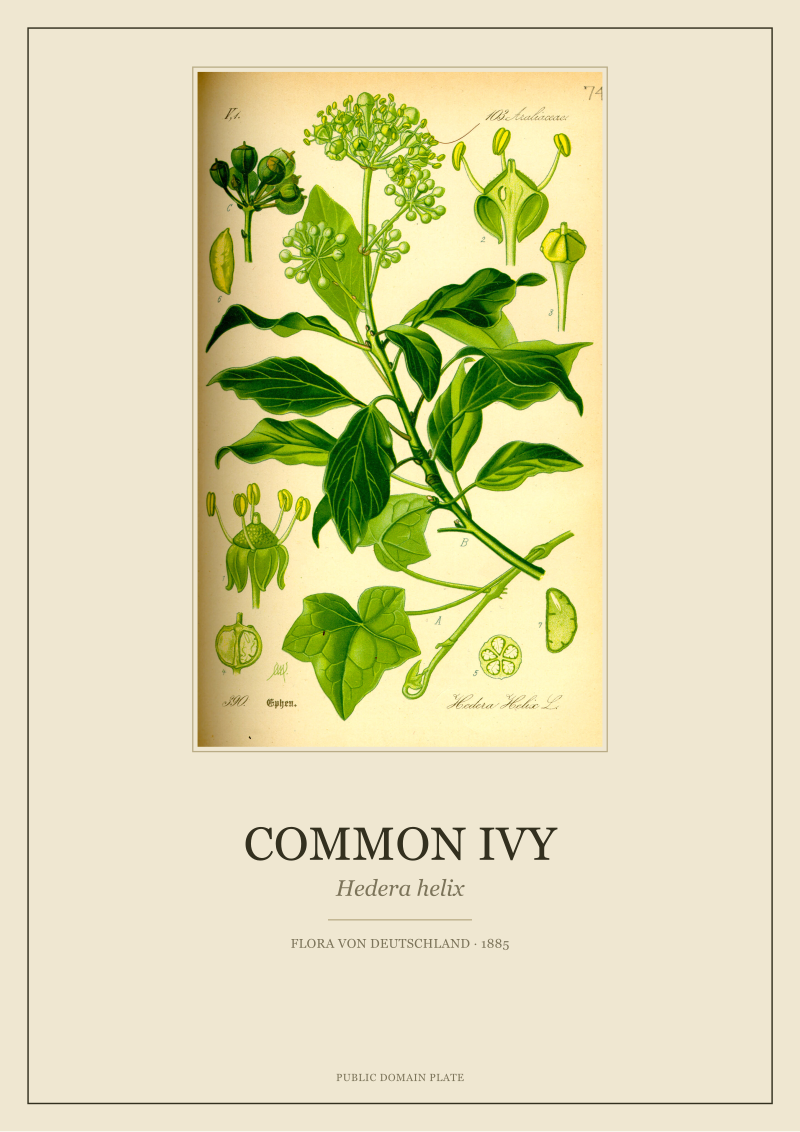 Common Ivy
The print from this article · from €29.95
View the print →
Common Ivy
The print from this article · from €29.95
View the print →
The Accuracy Test We Actually Ran
We did not run a resolution test. We ran an accuracy test, which is a different thing that almost nobody runs, and this is why the results were embarrassing for the "bigger is better" crowd.
The test had four measurements. First: line fidelity. We took the finest engraved line on the plate — the midrib of the smallest juvenile ivy leaf — and measured its width in pixels in each scan, then divided by the scan's stated DPI. All three should have returned the same physical width, because there is only one plate. They did not.
Second: colour fidelity relative to the physical plate. For this we borrowed one intact 1885 copy from a private collection, put it under standardised D50 lighting, and measured the green of a specific leaf lobe with a spectrophotometer. Three readings on the paper. Three readings sampled from the same lobe in each scan. Then we compared each scan's green to the physical reading.
Third: registration. Chromolithographs are printed by aligning several stones, one per colour. When alignment slips even slightly, you see a thin coloured fringe along an edge. We looked at whether each scan preserved the true 1885 registration or introduced new misalignment through processing.
Fourth: what we called "signal versus artefact." How much of what your eye reads as detail in each scan is actually the drawing, and how much is paper texture, foxing spots, edge staining, or scanner noise the file has inherited. We did this the crude way: mask out the linework and count the remaining pixel variance. The higher that number, the more of the "detail" is not really Thomé — it is the biography of one physical sheet.
Where Each Scan Lied, And How
Scan A, the 412 MB prestige file, failed on measurements one and four. The midrib of the smallest juvenile leaf came out roughly 15 percent wider in physical terms than in the other two scans. This is because Scan A had been captured at maximum optical resolution and then upsampled again in software before export, and the upsample smeared fine lines. It also carried enormous variance in the non-linework regions: every fibre of the paper, every microscopic freckle, every scanner-lamp streak was recorded in loving detail. This is fine if you are conserving the book. It is a disaster if you are trying to sell a print of the drawing, because the print buyer is not paying to look at somebody else's foxing.
Scan B failed on measurement two. Its embedded colour profile was accurate in aggregate, but it had normalised the greens toward a modern, slightly cooler register. Against the spectrophotometer reading, its leaves were noticeably bluer than the real 1885 leaves. Not by a huge margin, but enough that if you printed Scan B at wall size next to the physical book, a trained eye would flinch.
Scan C, the little 34 MB PDF page everyone quietly uses, failed on measurement three. Its compression had introduced a hairline yellow fringe along the darkest outlines that is not on the plate. The registration you see is not Thomé's registration; it is JPEG artefact pretending to be press slip.
Every scan lied. None of them was the drawing. Three separate lies, three separate mechanisms, and not one of them was caught by the metric — DPI, file size, source prestige — that the whole print-on-demand economy uses to decide which scan to charge you the most for.
What We Kept From Each, And Why
Our working restoration of Hedera helix is not any one of the three scans. It is a hybrid, and this is the part of the process that no marketplace listing will ever tell you about, because "we composited three source files" does not fit on a product page.
From Scan A we kept the geometry of the linework at a small central region — the mature leaf cluster at the top-right of the plate — where its optical detail was genuinely useful and its upsample smear had less effect. We did not use its colour anywhere. We treated it as a line reference, not a picture.
From Scan B we kept structure. Its processing was competent, its dust removal was already done, and its overall arrangement of tonal values matched the physical plate more closely than the others once we corrected its cool green cast against the spectrophotometer reading. Scan B was our base layer.
From Scan C we kept almost nothing except a sanity check. Every time we made a colour decision, we compared it to Scan C to remind ourselves what most of the internet sees when it thinks of this plate. If our result drifted too far from Scan C's overall impression, we knew we had crossed from restoration into invention, and we pulled back.
The finished file is 96 MB. It is smaller than Scan A, larger than Scan B, dramatically larger than Scan C, and describes itself honestly in the metadata: source plates listed, spectrophotometric reference recorded, every processing pass logged. It is not the highest-resolution scan in existence. It is the closest we could get, with the tools we have, to the drawing Thomé's team put on the stone in 1885.
What This Changes About Buying A Botanical Print
Almost every "premium" botanical print listing you will see is Scan C with a Photoshop filter and a marked-up price. Some are Scan A, which is honestly worse — the seller has confused a heavy archival TIFF with a well-restored print and passed the confusion on to you. Almost nobody sells a plate that has been checked against the physical object it claims to reproduce, because doing that is slow, unglamorous, and eats margin.
If you take one thing from this piece, take this: the questions that matter when you are buying a botanical print are not "what resolution" and "what file size." They are "which physical copy of the plate did the scan come from," "what did the studio verify against the paper," and "what did they decide to leave in and take out, and why." A shop that can answer those three questions has done the work. A shop that responds with a DPI number has not.
You can see our restored Hedera helix, with the full source-plate provenance and the correction notes, in the studio's shop. The next honest question — the one this piece has been circling without answering — is what the same test looks like for the plates in Thomé's flora that survive in only one or two copies, where you cannot pick the best of three scans because there are not three. That is where restoration stops being a comparison problem and starts being a curatorial one, and it is not where this piece ends.
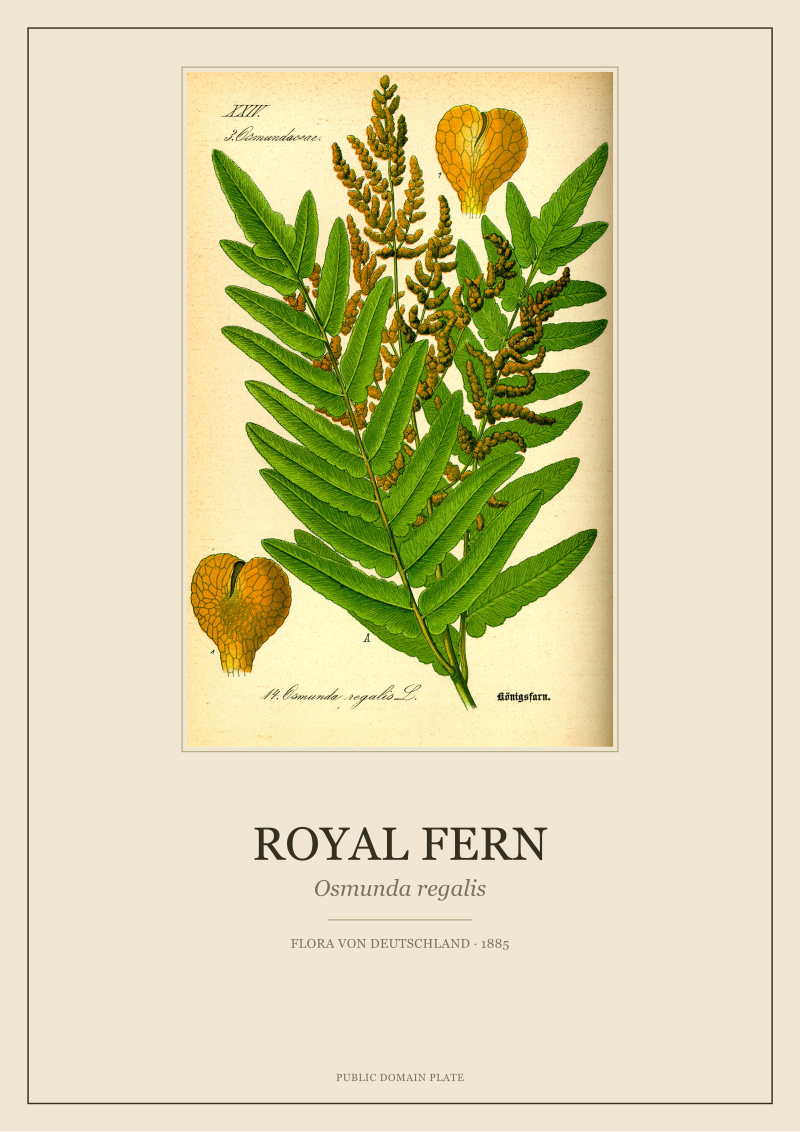
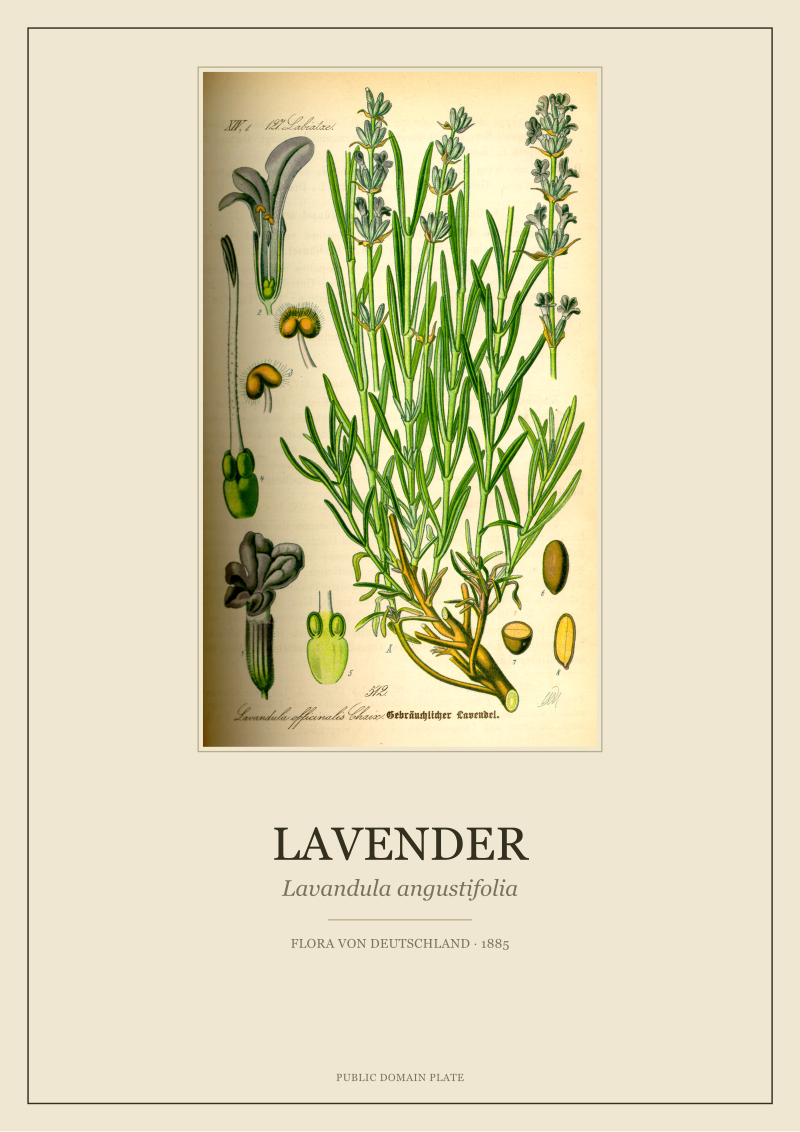
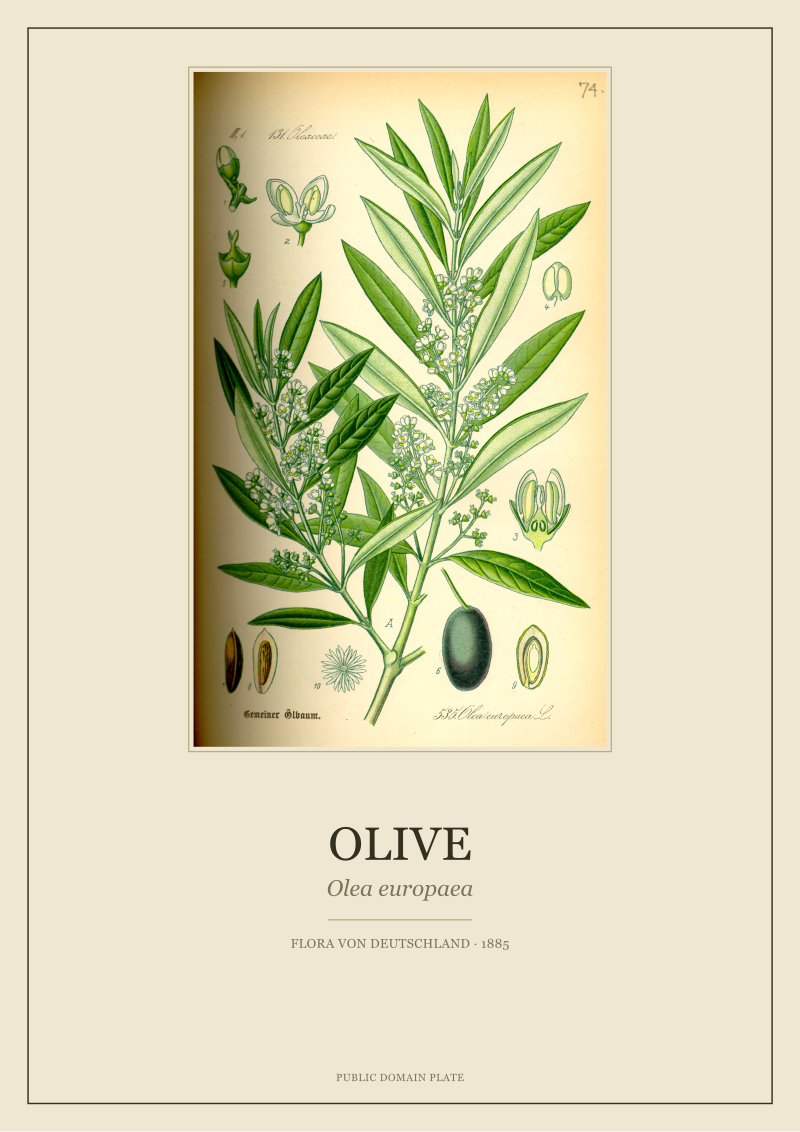
New plates from the archive and 10% off your first print.
One email now with your code. No noise after.